
 The water supply in most American cities contains chlorine, fluoride, and varying amounts of dissolved minerals including calcium, magnesium, sodium, chlorides, sulfates, and bicarbonates. It is also common to find traces of iron, manganese, copper, aluminum, nitrates, insecticides, and herbicides. Prescription medications have also been found in the tap water of 41,000,000 American homes. According to the Associated Press, there is a vast array of pharmaceuticals including antibiotics, anti-convulsants, mood stabilizers, and sex hormones in the municipal water supplies. The U.S. Government does not require any testing for drugs in the water supplies; nor does it set safety limits for drug contamination. It will be decades before we know the long-term effects of ingesting random cocktails of partially-digested prescription drugs.
Chlorine
 Chlorine bleach in the form of chlorine dioxide is added to practically all U.S. public water supplies as a disinfectant. It is not used because it is safe, but because it is cheap. Adding chlorine limits the liability of the governmental agencies which regulate public water, because the side-effects of their chlorine disinfection are difficult to trace and occur only after extensive long-term use. For example, it would be easy for citizens to prove that they became ill from drinking non-disinfected water by simply testing the contaminated water for live pathogens, but it is much more difficult to prove that their heart disease or cancer was created by chlorine byproducts after twenty years of consuming them. Chlorine bleach is used to satisfy certain priorities, whereby saving money is a much higher priority than long-term public health.
When usage of chlorine began in the early 1900's, the long-term effects were unknown, but there are no longer any legitimate excuses that could be used to justify forcing the public into drinking bleach. It is not uncommon to find the chlorine in tap water at such a high level that it is unsafe for swimming pools. A simple chlorine test kit from a local retailer will typically yield surprising results.
One troubling quality of chlorine is its tendency to neutralize oxygen. Once inside the body, it has an oxygen-depleting effect, and this shifts the body's pH toward becoming acidic. These effects are disruptive to a person's immune system, which opens him up to a whole host of potential infections, and it makes him much more prone to suffering allergy symptoms. Water occurring in nature always contains a small amount of hydrogen peroxide, which in many ways makes natural water the opposite of "treated" water in pH, oxygen levels, and in overall healthiness. The difference between pure water and chemically-altered tap water is literally the difference between natural rain and acid rain.
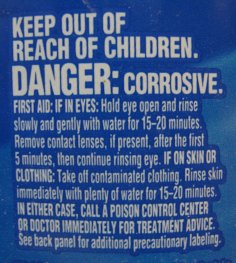 The most significant risk with chlorine products, such as chlorine dioxide, come not from the chlorine itself, but from its dangerous byproducts that are known as trihalomethanes (THM's). These are produced whenever chlorine contacts organic proteins. An example of a THM is chloroform, a proven cancer-causing agent. Animal studies have consistently shown an association between THM's and cancers of the liver and kidneys. Chlorine and THM's are strong contributing factors in creating colon and bladder cancers, as well as diabetes, kidney stones, and heart attacks.
Chlorine has been known for years to both cause and worsen respiratory problems, including asthma and pneumonia. As a halogen which damages enzymes, chlorine weakens the immune system upon ingestion. Chlorine causes magnesium deficiencies, which can cause migraine headaches, high blood pressure, chemical sensitivities, and in severe cases, sudden death according to Mark J. Eisenberg, M.D. (especially when it is combined with MSG). Chlorine also decreases the absorption of calcium while increasing its excretion, and the excretion of phosphorus. This increased loss of calcium into the urine can lead to bone-related problems including osteoporosis. Chlorine is known to irritate the skin, the eyes, and the respiratory system.
"Chlorine is the greatest crippler and killer of modern times. While it prevented epidemics of one disease, it was creating another. Two decades ago, after the start of chlorinating our drinking water in 1904, the present epidemic of heart trouble, cancer and senility began."
-- Dr. Joseph M. Price
Dioxins are a byproduct of the chlorination process, and they are known for causing cancers, endometriosis, and neurological damage. Dioxins are present in municipal water as a result of the chlorine dioxide.
Fluoride
 The American Dental Association, the F.D.A., and the U.S. Centers for Disease Control all maintain that mercury, a cumulative, toxic, heavy metal is perfectly safe to be embedded into our living teeth, by way of 'silver' dental fillings. Not surprisingly, they also support the fluoridation of public water reservoirs under the guise of improving dental health. The American public has been mass-poisoned with fluoride for more than half a century. It was justified with claims that fluoride produces dental health benefits, even though there has never been evidence that ingestion of it is beneficial. Only topical applications of fluoride have been shown to strengthen teeth. Conversely, there is overwhelming evidence indicating that ingested fluoride is a bio-accumulative poison that attacks the human body systemically, including the teeth. These facts were known long before fluoride was added to tap water.
"If this stuff gets out into the air, it's a pollutant; if it gets into the river, it's a pollutant; if it gets into the lake, it's a pollutant; but if it goes right into your drinking water system, it's not a pollutant. That's amazing..."
-- Dr. J. William Hirzy, E.P.A.
The E.P.A. classifies fluoride as a toxic waste product from aluminum processing, uranium processing, and fertilizer manufacture; but they nonetheless allow it to be added directly into water for human consumption. Instead of the pharmaceutical grade fluoride that is used in toothpastes, it is this left-over industrial waste that is added to water supplies. If a large amount of fluoride is spilled at any location, then it is immediately quarantined as an E.P.A. emergency clean-up site, and all of the clean-up workers are required to wear hazardous materials suits. Nearby communities are evacuated by law enforcement and National Guard units. The risk that they never mention to the public is that if the fluoride truck catches fire, then the fluorine gas released by the heat could kill thousands. The luckier victims would die immediately but the not-so-lucky would die in the following years from horrific bone cancers. Public health authorities could be expected to follow the usual pattern of claiming that the subsequent cancers are mysterious and unexplainable.
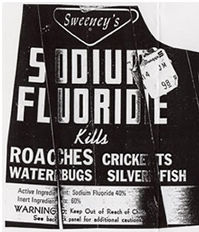
Fluorine gas is what eradicated the dinosaurs after a major volcanic eruption filled the Earth's atmosphere with it. However, our regulators are okay with fluoride lacing the public water supplies, and with it being used in infant formulas for babies who are much more susceptible, and who do not even have teeth. Aside from being placed in our toothpaste and various fluoride 'supplements', sodium fluoride is the main ingredient of rat poisons. It is also used in pesticides, insecticides, and fungicides.
Every form of fluoride has a cumulative effect in the body. Every time a person drinks fluoridated water, eats contaminated produce (produce grown with high-phosphate fertilizers), eats processed foods, or brushes his teeth with fluoridated toothpaste, he is adding to his body's toxic reserves. Even without swallowing any toothpaste, his mouth will absorb up to 1 mg. of fluoride per brushing -- directly into the bloodstream through skin absorption.
The scientists who originally promoted the use of fluoride are the same infamous ones who promoted adding lead to gasoline, and who performed radiation experiments on unknowing soldiers. They were well endowed by the chemical industry for all of this, and for keeping silent about their most disturbing findings. They were traitors to the practice of medicine, and traitors to their country. These doctors were proud mass murderers, and their experiments are well documented.
Here is some of that history. The top scientist who oversaw the Newburgh Experiment, and the leading voice promoting water fluoridation as safe was Dr. Harold Hodge. Dr. Hodge is still regarded as "the dean" of the science of toxicology in the United States. While selling the use of fluoride for children, he was simultaneously head of the Division of Pharmacology and Toxicology for the Manhattan Project. He was charged with protecting the government from worker and community lawsuits for fluoride exposure, since fluoride was a byproduct of uranium enrichment. Marketing that fluoride was safe in low doses was the Manhattan Project's official policy to reduce the risk of lawsuits against the atomic bomb program. Current fluoride policy is the result of that deceptive marketing. People now believe that it is safe enough to drink.
Since cities purchase fluoride for their water supplies, the fertilizer and nuclear industries have the best corporate welfare programs. Instead of paying billions to neutralize their toxic waste before discarding it, they accept payments for creating the toxic waste at a 20,000% markup. The tax payers are customers of this substance which is poisoning them, whether they like it or not. The industry is really making a killing.
"If I were to name one element or chemical compound that would represent the 'Bane of Mans existence on Earth' it would be fluorine or fluoride. Fluorine has caused huge problems for man since the beginning of time due to volcanic events on Earth. Fluorine or Hydrogen Fluoride released from volcanic events or even meteor terminal events is the principle effect for extinction events on this planet... Rising levels of fluoride are directly connected to disruption of enzymes necessary for cell repair (glutathione particularly) and fluoride prevents the removal of toxic metals from the human body. The effect results in the rise of lead, mercury, and other toxic metals in children that impair their I.Q. and long term health. In the elderly, it hastens the onset of gray hair because it is linked to mercury concentrations in the body. It also adds to brittle bone problems, dementia from toxic metals' effects on the brain, and quite literally onset for immune illnesses and death. Fluoride is not a friend to children's teeth, but a deadly cumulative poison where 98 percent of the fluoride ingested goes right to the bone of children to disrupt their health in much the same way that Sr90 from nuclear testing was feared to cause cancer in children. The remaining unabsorbed fluoride attacks the kidneys as they attempt to filter it out of the body, and excrete it through the urinary tract".
-- Jim Phelps, former Oak Ridge National Laboratory researcher
A Partial List of the Effects of Fluoride Ingestion
- Brittle bone disease
- Brittle teeth
- Brown, yellow, spotted and discolored teeth
- Cancer
- Heart disease
- Arthritis
- Premature aging
All of these conditions are epidemic in the United States. Fluoride has also been directly linked to osteosarcoma, a rare bone cancer. Fluoride consumption amongst young children results in reduced mental work capacity and a significantly lower I.Q. Fluoridated water effects the hormones in the body, and thus it is a leading cause of the growing infertility rates, and both underweight and premature births. Those who have any doubts about the danger level surrounding fluoride should take another look at their fluoride toothpaste label. The F.D.A. forces toothpaste companies to print the following label on all products that contain fluoride:
"If more than used for [normal product use] is accidentally swallowed, get medical help or contact a poison-control center right away."
Fluoride Was First Utilized by the NAZIs
"In the 1930's, Hitler and the German NAZIs envisioned a world to be dominated and controlled by a NAZI philosophy of pan-Germanism. The German chemists worked out a very ingenious and far-reaching plan of mass-control which was submitted to and adopted by the German General Staff. This plan was to control the population in any given area through mass medication of drinking water supplies. By this method they could control the population in whole areas, reduce population by water medication that would produce sterility in women, and so on. In this scheme of mass-control, sodium fluoride occupied a prominent place.
"Repeated doses of infinitesimal amounts of fluoride will in time reduce an individual's power to resist domination, by slowly poisoning and narcotizing a certain area of the brain, thus making him submissive to the will of those who wish to govern him.
"The real reason behind water fluoridation is not to benefit children's teeth. If this were the real reason there are many ways in which it could be done that are much easier, cheaper, and far more effective. The real purpose behind water fluoridation is to reduce the resistance of the masses to domination and control and loss of liberty. I was told of this entire scheme by a German chemist who was an official of the great I.G. Farben chemical industries and was also prominent in the NAZI movement at the time. I say this with all the earnestness and sincerity of a scientist who has spent nearly 20 years research into the chemistry, biochemistry, physiology and pathology of fluorine."
-- Charles Perkins, Chemist Rebuilding German Infrastructure, 1954
Psychiatric Effects
Fluoride has been shown to accumulate in the pineal gland. The pineal gland is a pine cone-shaped organ near the center of the brain. It is believed to be responsible for melatonin production, and thus the regulation of the sleep cycle. It is also believed to play a role in seasonal depression, because more melatonin is produced in periods of darkness. Brain serotonin appears to be in the highest concentration inside the pineal gland.
In most medical literature, calcification of the pineal gland is expressed to be a natural phenomena that increases with age. Calcification is when calcium, fluoride and phosphorus combine; until they merge into a hard, rock-like object that is viewable on brain scans. Despite the medical literature's promotion that this occurs normally with aging, pineal calcification is actually only a problem of Western lifestyles; indicating that it is our chemical exposures and diets that cause brain calcification. In West Africa for example, a hospital that performed 20,000 skull x-ray examinations over a period of 10 years encountered less than 10 cases (less than 0.05%) of patients having pineal gland calcifications that were visible in X-ray imaging. In contrast, calcified pineal glands are visible in about 50% of Caucasian adult skull radiographs, for people over the age of forty in the United States. The rate for American Negroes is 25%.
Reversing the Damage and Neutralizing Fluoride Poisoning
Most Americans experience fluoride poisoning symptoms through various mysterious ailments and aggravated conditions. Iodine and fluoride neutralize one another. Our modern diets are deficient in iodine, which makes the fluoride problem worse. In moderate amounts, iodine will work wonders for most people's immune systems, because most people have under-active thyroids due to the toxicity of their diets, fluoride from pharmaceuticals, and years of miscellaneous fluoride exposure. It is a big part of obesity.
Unfortunately, it is quite difficult to find either iodine or iodide that is safe for human consumption. The largest fraud of alternative medicine is dangerous iodine supplementation, so beware of iodine supplement products. We recommend that readers carefully read our iodine article before attempting any iodine or iodide supplementation. Iodine that is improperly used can quickly destroy the health or kill.
We only provided an analysis of the two main toxins found in U.S. water supplies in this article. We neglected the dangers of heavy metals, pesticides, drugs, and various industrial pollutants that are a normal part of municipal water supplies.
The acquisition of a high-end water filter is prudent. For those readers who already filter their water, we regret to inform you that you may not be as safe as you believe. There is only one type of water filter we know of that can remove fluoride, and it cannot be found in retailers. Most water filters are not designed to remove the chemicals that go through them, and instead merely aim to mask the foul taste. Take this as being typical of water filter scams: Brita water filters mask only the chlorine taste, but they do not remove the chlorine. The manufacturer would have us believe that drinking chlorine is completely safe -- whose identity is the Clorox Company. We were actually contacted by a company representative, who tried to convince us that chlorine is a health-boosting elixir, after we exposed the Brita filters in one of our audio shows.
Our official recommendations are to either purchase bottled spring water in a safe plastic, drink well water, or purchase a Berkey water filter. Americans should also get the optional fluoride filters. Be forewarned that some spring water is not really spring water. Sometimes, it is tap water that has been filtered through reverse osmosis or other means, then the minerals are added back in (at the chemical factory). Buyer beware, and read the labels carefully.
"According to the handbook, 'Clinical Toxicology of Commercial Products', fluoride is more poisonous than lead, and just slightly less poisonous than arsenic. It is a cumulative poison that accumulates in bones over the years.
"A study by Proctor and Gamble showed that as little as half the amount of fluoride used to fluoridate public water supplies resulted in a sizable and significant increase in genetic damage. Epidemiology research in the mid-1970's by the late Dr. Dean Burk, head of the cytochemistry division of the National Cancer Institute, indicated that 10,000 or more fluoridation-linked cancer deaths occur yearly in the United States. In 1989, the ability of fluoride to transform normal cells into cancer cells was confirmed by Argonne National Laboratories. Results released in 1989 of studies carried out at the prestigious Batelle Research Institute showed that fluoride was linked to a rare form of liver cancer in mice, oral tumors and cancers in rats, and bone cancer in male rats. Since 1991, the New Jersey Department of Health found that the incidence of osteosarcoma, a type of bone cancer, was far higher in young men exposed to fluoridated water as compared to those who were not. In addition to the well documented toxic effects of fluoride, fluoride even at dosages of 1 part per million, found in artificially fluoridated water, can inhibit enzyme systems, damage the immune system, contribute to calcification of soft tissues, worsen arthritis, and of course, cause dental fluorosis in children. Fluorosis consists of unsightly white, yellow, or brown spots that are found in teeth exposed to fluoride during childhood. In 1993, the Subcommittee on Health Effects of Ingested Fluoride of the National Research Council admitted that 8% to 51% and sometimes up to 80% of the children living in fluoridated areas have dental fluorosis. Malnourished people, particularly children (who are usually targeted most for fluoridation) are at the greatest risk of experiencing fluoride's harmful effects.
"Surprisingly, the most recent studies do not even show that water fluoridation is effective in reducing tooth decay. In the largest U.S. study of fluoridation and tooth decay, United States Public Health Service dental records of over 39,000 school children, ages 5-17, from 84 areas around the United States showed that the number of decayed, missing, and filled teeth per child was virtually the same in fluoridated and non-fluoridated areas. Dr. John Colquhoun, former Chief Dental Officer of the Department of Health for Auckland, New Zealand, investigated tooth decay statistics from about 60,000 12 to 13 year old children and showed that fluoridation had no significant effect on tooth decay rate. Given all of this scientific information, what is behind this push for universal fluoridation? Prior to 1945, fluoride was properly regarded as an environmental pollutant. It was responsible for many lawsuits against industries, such as the aluminum industry, and the phosphate fertilizer industry, whose waste products contain large quantities of fluoride. This fluoride destroyed crops and animals, leading to the lawsuits. The limited public view was that fluoride was an environmental pollutant that needed to be reduced or eliminated from the environment. As a result of clever public relations campaigns, fluoride was transformed from an environmental pollutant to an essential nutrient necessary for producing healthy teeth. The science was poor, but the P.R. campaign was great. Being against fluoride was like being against motherhood or apple pie. Industries not only made millions from selling this environmental pollutant to water companies and toothpaste companies, but more importantly, it saved billions of dollars that would be required to clean up this environmental pollutant."
-- Michael Schachter, M.D. and Naturopathic Doctor
Most Common U.S. Water Toxins
| 1) 1,1,1,2-Tetrachloroethane 2) 1,1,2-Trichloroethane 3) 1,1-Dichloroethane 4) 1,1-Dichloropropene 5) 1,2 Dibromo-3-chloropropane (DBCP) 6) 1,2,3-Trichloropropane 7) 1,2,4-Trichlorobenzene 8) 1,2-Dibromoethylene 9) 1,2-Dichloroethane 10) 1,3,5-Trimethylbenzene 11) 1,3-Dichloropropane 12) 1,4-Dioxane 13) 2,2-Dichloropropane 14) 2,4,5-T 15) 2,4,5-TP (Silvex) 16) 2,4-D 17) 2-Hexanone 18) 2-Nitropropane 19) Acetochlor 20) Aldicarb 21) Aldicarb sulfone 22) Aldicarb sulfoxide 23) Alpha-Lindane 24) Aluminum 25) Ammonia 26) Aniline 27) Anthracene 28) Antimony 29) Arsenic 30) Atrazine 31) Barium 32) Benzene 33) Benzo[a]pyrene 34) Beryllium |
35) Bromate 36) Bromide 37) Bromobenzene 38) Bromodichloromethane 39) Bromoform 40) Bromomethane 41) Cadmium (total) 42) Carbaryl 43) Carbon tetrachloride 44) Chloroethane 45) Chloroform 46) Chloromethane 47) Chromium 48) cis-1,2-Dichloroethylene 49) Cyanide 50) Dalapon 51) Di(2-Ethylhexyl) adipate 52) Di(2-ethylhexyl) phthalate 53) Dibromochloromethane 54) Dibromomethane 55) Dicamba 56) Dichlorodifluoromethane 57) Dichloromethane (methylene chloride) 58) Dieldrin 59) Dinoseb 60) Endrin 61) Ethylbenzene 62) Ethylene dibromide (EDB) 63) Heptachlor 64) Heptachlor epoxide 65) Hexachloro-cyclopentadiene 66) Isopropylbenzene 67) Lindane 68) m-Dichlorobenzene |
69) Manganese 70) Mercury 71) Metolachlor 72) Monochlorobenzene (Chlorobenzene) 73) n-Butylbenzene 74) n-Propylbenzene 75) Naphthalene 76) Nitrate 77) Nitrates & nitrites 78) o-Chlorotoluene 79) o-Dichlorobenzene 80) Oxamyl (Vydate) 81) p-Chlorotoluene 82) p-Dichlorobenzene 83) p-Isopropyltoluene 84) Pentachlorophenol 85) Picloram 86) Radium-226 & Radium-228 87) sec-Butylbenzene 88) Simazine 89) Styrene 90) Sulfates 91) tert-Butylbenzene 92) Tetrachloroethylene 93) Thallium 94) Toluene 95) Total haloacetic acids 96) Total trihalomethanes (THMs) 97) Toxaphene 98) Trichloroethylene 99) Trichlorofluoromethane 100) Vinyl chloride |
Related Articles
Neutralize Chlorine with Vitamin C
Iodine Deficiencies and Iodine Supplementation
The W.H.O. Has Another Plan To Make Us Healthier Through Forced Medicating