
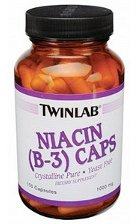
The need for niacin (vitamin B-3) is often marginalized, even amongst the health conscious. Multi-vitamins and B-complex supplements typically contain only negligible amounts of it. Although ensuring an adequate intake of niacin should be paramount considering that about one out of every three people die from heart disease in the industrialized world, and clinical depression effects about one in every ten adults.
Niacin is an essential nutrient that we typically do not get enough of through our diets, due to depleted soils and processed foods. It is found in dairy products, poultry, fish, lean meats, and nuts. Niacin is vital for the proper digestion of foods, as well as maintaining nerve health and repair. It likewise maintains healthy skin.
Pellagra and Associated Diseases
Pellagra is a disease state that is synonymous with niacin deficiencies. It occurs amongst poor populations having niacin deficiencies. This condition impairs memory and mental health in as much as it contributes to various chronic diseases.
|
||||||
| 1. A chronic disease caused by a deficiency of nicotinic acid in the diet and characterized by gastrointestinal disturbances, skin eruptions, and mental disorders: it is endemic in some parts of the world.
Taken from Webster's New World College Dictionary. |
||||||
Symptoms of Pellagra
- Diarrhea
- Dermatitis
- Dementia
- Hyper-pigmentation
- Thickening of the skin
- Inflammation of the mouth and tongue
- Digestive disturbances
- Amnesia
- Delirium
- Depression
- Death
In modern times, it is extremely rare for deaths to be attributed to pellagra, but niacin deficiencies are still a key factor in causing chronic diseases. A deficiency of niacin will cause digestive problems (malnutrition), slow the metabolism, and decrease one's tolerance to cold temperatures. Niacin is utilized for DNA repair, and it assists in the production of natural steroid hormones inside the adrenal glands.
Niacin is also very helpful for the treatment of depression and anxiety, in part because the body converts it into L-tryptophan. Pellagra sufferers have historically displayed the classic symptoms of dementia (which is not to be confused with the modern, redefined version of "dementia", which is actually a variant of Alzheimer's disease). Therefore, niacin is critical for maintaining mental health. A dosage of 500 mg. has been shown to enhance short-term memory by 40%. The overall effect upon long-term memory maintenance may be even greater, but this is more difficult to test.
As in the case of scurvy (vitamin C deficiency), death from this condition is much slower in this modern age, and such deficiencies manifest themselves in the form of heart disease. Niacin protects the arteries from inflammatory damage, which dramatically reduces cholesterol levels; since cholesterol is produced by a body to patch arterial damage. Therefore, niacin can significantly decrease the risk of heart attacks, since it eliminates the conditions that place undue stress upon the heart.
The Coronary Drug Project did a study, whereby 8,000 heart attack victims were issued 3 grams of niacin daily for six years. They reported that there was a reduced incidence of subsequent heart attacks by 27%, and strokes by 26% (compared to the placebo group). A third of the heart attacks and a third of the strokes were prevented by the supplementation of niacin, with no other dietary or lifestyle changes. The combined percentages equates to about half of the at-risk test subjects having their lives saved with niacin supplementation alone.
Supplementation Suggestions
Flushing is a condition that is often experienced after niacin supplementation; especially with beginning users or people who use tobacco products. Parts of the body (usually the face and upper chest) become rosy red for people experiencing niacin flushes. Niacin flushes may produce the sensations of hot flashes. Severe itching may occur or the sensation of a sun burn. Flushes may last for two hours. No pain is experienced, but the flushing can be a great annoyance.
Purchasing an optimal niacin supplement may not be a simple task, because several forms are available. There is plain niacin, no-flush niacin, and time-released niacin. Time-released niacin can be dangerous, and has been known to cause terrible side effects, including hallucinations and insomnia. We strongly recommend against using time-released niacin because of these risks, and due to its inexcusable toxic impurities.
No-flush niacin is a fraud, because it does not even contain niacin. It should be avoided. It is actually niacinomide, which is believed to be one of the compounds that is metabolized by the body from niacin. It is believed that the conversion process from niacin to niacinomide is what causes redness in the face and chest known as "flushing". No-flush niacin attempts to skip this important biological step. The natural conversion of niacin to niacinomide is what reduces cholesterol and protects the arteries. Therefore, this lab-created bio-chemical does not help to reduce cholesterol, or protect the arteries. In addition, it is likely to cause liver damage with long-term usage. In other words, no-flush niacin is actually a dangerous chemical with no benefits, and it is not even niacin.
Niacin Recommendations
The wisest approach is to use plain niacin, and to cope with any initial flushing issues. Flushing does not occur for everyone, and it usually stops occurring after about two weeks of daily supplementation with a consistent dose. The flushing is not dangerous, but it can scare first-time users. There is no need to panic or to confuse it with an allergic reaction. The redness occurs due to the widening of the blood vessels near the skin, and regionalized itching will indicate that niacin is flushing toxins from a particular area. Due to our toxic lifestyles, most people will experience this for up to several weeks. Some people may benefit from taking niacin prior to sleeping, so that they may sleep through the flushing. Both nicotine and alcohol greatly intensify the flushing reactions from niacin.
Of course, be watchful for rashes, swelling, and difficulty breathing, which would indicate a true allergic reaction caused by an impurity within the supplement. It is one reason to avoid supplements from notorious countries such as China, and it is becoming difficult to locate supplements that are not.
Always keep some activated carbon ready for such emergencies, and decide if a hospital visit is necessary using common sense. Supplement reactions are much less likely when they have been purchased from a reputable health food or herbal supplies store. Never buy supplements from general retailers or grocery stores.
We recommend against supplementing with more than 1,500 mg. (1.5 grams) of niacin, due to the risk of liver damage with extreme dosages. These amounts are unnatural, and the optimal effects of niacin can usually be gained from less than 1 gram daily. It is wise to start with smaller doses like 100 mg., and gradually increase to the desired level. Determining your ideal dose will require careful observations over a period of weeks. Of course, these are the adult recommendations, so children should be given less.
Related Articles
The Big One: Naturally Preventing and Curing Heart Disease
Another Medical Cover-Up: Sudden Infant Death Syndrome (S.I.D.S.) and The Vitamin C Connection
Antidepressants Produce Plenty of Side-Effects, But Don't Reduce Depression
Sharp Rise in U.S. Military Psychiatric Drug Use and Suicides
What's It Going to Take to Lock Up Drug Company Execs?
When Liberals and Conservatives are Two Sides of the Same Oppressive Coin