
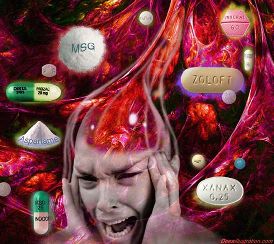
L-tryptophan is an essential amino acid that is found in many foods. It cannot be produced by the body itself, so it must be gained through a healthy diet, or through supplementation. It is the compound inside turkey that causes drowsiness, and turkey is the greatest natural source for it. L-tryptophan was a very common dietary supplement before being blocked for a year by the F.D.A. in 1989. It is used as a natural and holistic treatment for depression, and as a sleep aid.
It is widely believed that the body uses L-tryptophan as a building material to produce serotonin as needed. This is technically not true, as will be explained later. There is greater efficacy from L-tryptophan supplements than pharmaceutical S.S.R.I. anti-depressants, because supplemental L-tryptophan helps a body to naturally regulate its own serotonin effectively, so that there will never be too little or too much. It additionally helps the body to produce lactic acid, which has its own effect upon mood regulation.
As a natural substance, L-tryptophan cannot be patented, which became a big concern for the F.D.A. and its business partner, Eli Lilly (maker of Prozac), during the late 1980's. In the fall of 1989, the F.D.A. banned L-tryptophan sales in the U.S., claiming that it caused a rare and deadly flu-like condition known as eosinophilia-myalgia syndrome. The allegation was dishonest, following the usual pattern regarding herbs and supplements. L-tryptophan is merely a naturally-occurring amino acid (protein compound) that is already found inside of our foods. In other words, all of us would be in serious health trouble if the F.D.A. cronies had been telling the truth. Vegetarians would have been the only survivors of the tryptogeddon.
The illnesses reported by the F.D.A. were actually caused by toxic impurities in a specific L-tryptophan product, which had been imported by a Japanese manufacturer. The manufacturer was discovered to have been secretly experimenting with a genetically-engineered bacteria, in an attempt to speed the production process and increase the potency of its tryptophan product. The company's mixing of a genetically-engineered neurotoxin with a neurotransmitter precursor like L-tryptophan resulted in accelerated excitotoxin reactions beyond what is normally biologically possible. It was the process of mixing something similar to aspartame with a bio-engineered, bio-toxic, nervous system stimulant together: only worse. The deadly end product of this engineering was never truly L-tryptophan, but the perverse product was nevertheless the ammunition that the F.D.A. had been waiting for. The Japanese company was likely paid to taint its own products by the U.S. biotechnology industry, because the biotechnology industry would win regardless of the product's success or failure. Either they would find a way to patent their unnatural 'L-tryptophan' to legally kill the natural competition, or they would justify removing the competing natural tryptophan supplements from the market using the scandal.
Eosinophilia-myalgia syndrome was relabeled to "fibromyalgia", because the alleged cause (L-tryptophan) was removed from the market, and yet it occurred anyway. A completely different disease was quickly created by fiat, which conveniently had exactly the same symptoms. This way, L-tryptophan was still guilty of the completely different and yet completely identical disease. No action was ever taken against the Japanese company which was responsible for the poisoned L-tryptophan products, and its involvement was abruptly hushed. Instead of disciplining the manufacturer, or addressing the issue of contaminated products, the F.D.A. completely banned L-tryptophan as an illegal product on March 22nd, 1990.
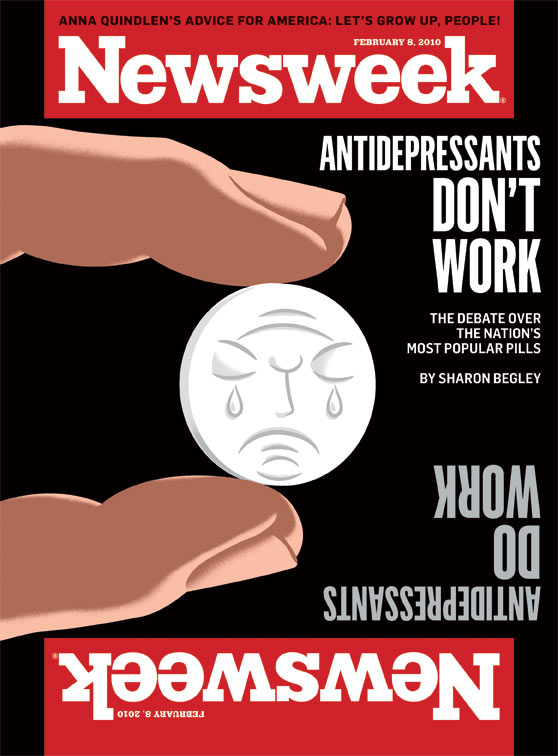
Prozac was first officially approved by the F.D.A. in December of 1987, but the big marketing scheme had not yet been employed. Just 4 days after the F.D.A. ban on L-tryptophan, on March 26, 1990, Newsweek magazine featured a cover article praising the new anti-depressant drug Prozac. Its cover paid homage to a floating, gigantic green and white capsule of Prozac, with the bold caption: "Prozac: A Breakthrough Drug for Depression". Eli Lilly marketed Prozac as a new "breakthrough" to differentiate it from the older anti-depressants, which had been taken off the market because they were so dangerous.
This four day coincidence went completely unnoticed by media sources, but it is jarring to anyone with a knowledge of how these two substances are believed to work. L-Tryptophan and Prozac are both believed to work with serotonin, which was a relatively new concept for allopathic medicine at the time. Prozac (fluoxetine) is marketed to "enhance" the serotonin that is already present in the brain through some mystical reaction that can only be defined in grotesquely-long marketing buzz words. It made great fodder for waiting room brochures. Prozac was never fully understood, so everyone was fair game.
In contrast, the all-natural L-tryptophan is very well understood. It is used as a building material by the body to produce either serotonin or lactic acid; both of which play large roles in mood regulation. This allows a body to produce the exact amount of natural serotonin and lactic acid that it needs; so that a body neither has too much, nor too little of either. Tryptophan is the body's safety net for an internal balancing act. It safely works with a body, instead of against it; by giving it a tool that is needed, instead of overloading it.
The drug patent on Prozac expired in 2001, which coincidentally is the same year that the F.D.A. ban on L-tryptophan was lifted. The F.D.A. was actually helping Eli Lilly again: this time by eliminating would-be competitors. With L-tryptophan again on the market, it was impossible for smaller competitors to successfully profit with generic Prozac, since they would have to compete with Eli Lilly's products and tryptophan at the same time. The F.D.A. was getting flooded by legal actions regarding Prozac at the time, due to the drug's side effects. Eli Lilly soon after re-branded Prozac as Sarafem for the treatment of pre-menstrual dysphoric disorder, in an attempt to illegally extend the patent through deception. Their patent was invalidated in a lawsuit against a manufacturer of generic Prozac, which judicially laid the patent to rest.
The Fluoride Connection
Notice the "fluo" part in Prozac's chemical name, fluoxetine. It denotes the drug's main active ingredient: fluoride. Fluoride is an active ingredient of all modern S.S.R.I. anti-depressants, and the trend of medicating depressed patients with high doses of fluoride began with Prozac. Fluoride robs people of their will; and therefore, it makes people easier to control for both authorities and psychiatrists. This is why these drugs have become so popular for supposedly treating attention deficit disorder, and the newly popularized, oppositional defiant disorder -- revealing that there is an agenda more related to social control than the legitimate practice of medicine. As one might expect, these drugs have become extremely popular in the military and the prisons.
In the 1930's, Germany's NAZI party envisioned a one world government, dominated and controlled by the NAZI philosophy of pan-Germanism. The German chemists produced an ingenious and far-reaching plan of mass-control that was adopted by the German General Staff. The plan was to control the population of any given area through forced mass-drugging with fluoride, via the drinking water. Through this method, they could pacify the populations of entire regions, reduce populations by water medication that sterilizes women, and so on. In their scheme of mass control and population control, sodium fluoride occupied a prominent place.
The following excerpt was reported by Charles Perkins, in 1954. He was an American chemist, who was rebuilding the German infrastructure.
"Repeated doses of infinitesimal amounts of fluoride will in time reduce an individual's power to resist domination, by slowly poisoning and narcotizing a certain area of the brain, thus making him submissive to the will of those who wish to govern him. The real reason behind water fluoridation is not to benefit children's teeth. If this were the real reason, there are many ways in which it could be done that are much easier, cheaper, and far more effective. The real purpose behind water fluoridation is to reduce the resistance of the masses to domination and control and loss of liberty. I was told of this entire scheme by a German chemist who was an official of the great IG Farben chemical industries and was also prominent in the NAZI movement at the time. I say this with all the earnestness and sincerity of a scientist who has spent nearly 20 years research into the chemistry, biochemistry, physiology and pathology of fluorine."
Fluoride has been shown to accumulate in the pineal gland. The pineal gland is a pine cone-shaped organ near the center of the brain. It is believed to be responsible for melatonin production, and thus the regulation of the sleep cycle. It is also believed to play a role in seasonal depression, because more melatonin is produced in periods of darkness. Brain serotonin appears to be in the highest concentration inside the pineal gland.
In most medical literature, calcification of the pineal gland is expressed to be a natural phenomenon that increases with age. Calcification is when calcium, fluoride and phosphorus combine; until they merge into a hard, rock-like object that is viewable on brain scans. Despite the medical literature's promotion that this occurs normally with aging, pineal calcification is actually only a problem of Western lifestyles; indicating that it is our chemical exposures and diets that cause brain calcification. In West Africa, for example, a hospital that performed 20,000 skull x-ray examinations over a period of 10 years encountered less than 10 cases (less than 0.05%) of patients having pineal gland calcifications. In contrast, calcified pineal glands are visible in about 50% of Caucasian adult skull radiographs, for people over the age of forty in the United States. The rate for American Negroes is 25%.
Fluoride is known to accumulate in the pineal gland in even greater amounts than it does in bone. It increases the uptake of calcium into the cells, which worsens their calcification (hardening), because calcification is predominantly misused calcium. Modern S.S.R.I. anti-depressant drugs are fluoride-based; so they add to the calcification of the pineal gland. The accumulated fluoride attracts more calcium. This ironically will worsen depression permanently, by artificially limiting the body's ability to regulate its sleep cycle, and disrupting the production of hormones.
Serotonin Theory and True Depression
The known effects of serotonin on the brain are mostly conjecture. When a patient tells his doctor that he is depressed, there are no tests of his serotonin levels. No such tests exist. Yet serotonin-altering drugs are prescribed, just as surely as antibiotics would be for the common cold. Doctors and other medical professionals are increasingly coming forward to question whether serotonin levels really lead to depression.
We have done exhaustive research about the mechanisms of L-tryptophan. Those who are lactose intolerant, experience gastrointestinal problems, or who experience fructose malabsorption are likely to experience depression. This is believed to be because L-tryptophan from food sources is not being properly absorbed by the intestines, leading to reduced L-tryptophan in the blood and brain. Thus, supplementation would seem prudent for treating the symptoms. However, there are loopholes in this logic, because both fructose and lactose are metabolized and absorbed differently.
Exercise results in both reduced depression and an increase of lactic acid in the blood. It is this lactic acid that is believed to be responsible for muscular soreness afterward. Exercise has been proven to be equally effective as a treatment for depression as pharmaceutical anti-depressants. Thus, exercise brings about physical changes that can reduce depression, and we will shortly see the clear link between blood-borne lactic acid and mood elevation going beyond the endorphins. Lactic acid is one of the endorphins.
The reason why people with lactose intolerance and fructose malabsorption experience depression may not be a direct result of L-tryptophan deficiency, but of a plasma lactic acid imbalance. Fructose can be converted into lactic acid, but not in the case of someone who is suffering with fructose malabsorption. Those who are lactose intolerant are unable to create their own lactic acid through the usual route of lactose metabolization. This could be remedied by L-tryptophan intake, since lactic acid is metabolized from L-tryptophan reserves. This tells us that lactic acid may well be the cure for non-psychological depressions, but not when it is ingested in a synthetic form. It must foremost be ingested as L-tryptophan or fructose, and then be converted by the body. Without this conversion process, lactic acid is known to produce side effects, which ironically include depression.
Curing is about restoring balance, and the body can do better regulation than any chemist. With that said, lactic acid has long been demonized; especially by ignorant athletes. Recent studies are showing that such attitudes may be backwards. According to the New York Times, new studies show that lactic acid is the main catalyst for muscle repair and re-growth; not an athletic menace causing unnecessary pain and suffering.
Fructose
L-tryptophan
L-tryptophan
-->
-->
-->
Lactic Acid
Lactic Acid
Serotonin
Of course, we are not going to recommend that people start consuming processed sugars or high fructose corn syrup to eliminate their depressions. To the contrary, the lactic acid that is produced from chemically-extracted fructose seems to be much less effective in helping with depression, and it fosters a huge array of very serious disease states. People should also avoid homogenized milk as a source of lactic acid too, because it too will bring long-term health consequences through inflammation, and these consequences include heart disease. Lactic acid from whole milk is nevertheless something of an anti-depressant and calmative, as is shown in its use with young children. Crying over spilled milk is not just a figure of speech.
We recommend L-tryptophan supplementation for those who are suffering with non-psychological depressions, as a method to naturally increase bio-usable lactic acid, but not necessarily serotonin. 5-HTP is based upon L-tryptophan, and has very similar effects, but it is not believed to be as effective. The calmative actions of both lead to a much more restful sleep, which is normally a chronic problem for depressed individuals. L-tryptophan will only produce more serotonin if it is needed. Only the right balance of serotonin and naturally-produced lactic acid helps to reduce depression. L-tryptophan allows the body to tip the bio-chemical scales in whichever direction they need to go. It demonstrates the difference between new age medicine and God's medicine.
Additional Depression Fighting Supplements
All of the nutrients that we recommend to reduce depression should be present in a healthy, balanced diet. However, it is becoming difficult to eat a healthy diet, due to our fertilizer-depleted soils, the biotechnology industry, the chemical industry, the pharmaceutical industry, and the nuclear industry. People with well-balanced diets very rarely become depressed.
- Imbalances of zinc and copper have been tied to depression, and they are interdependent in the body. A deficiency of one can cause an unhealthy excess of the other. They should always be supplemented with together, to allow the body to create an ideal balance. *
- Cashews and walnuts are very helpful in stabilizing the hormones that contribute to depression, and provide the B vitamins that improve moods. Peanuts are not very helpful.
- Magnesium (requires vitamin D and calcium). Supplement in moderation, because an excess of magnesium can cause other nutritional deficiencies.
- White vein kratom (Maeng Da) can be used as an anti-depressant. It is important to know that white vein kratom has entirely different effects to its close cousins, red vein (Thai) kratom and green vein (Green Malay) kratom. White vein kratom is known to enhance a person's mood, while paradoxically being a calming stimulant. Some people find that it also improves their drive and overall desire to accomplish. Reference the article about painkillers for detailed information about kratom.
- Salvia Divinorum. This is a powerful hallucinogen, which is smoked. Be sure to learn about salvia before using it, and be aware that it may be illegal in your area.
- Hormone regulating fruits, such as pears, peaches and apples. These work best in combination, so be sure to reference our juice drink.
- 5-HTP has been gaining a lot of popularity in recent years for its efficacy in eliminating depression. It has been demonstrated to be effective in multiple studies. Start supplementing with 25 mg., and increase the dosage by 25 mg. every four days if it is not having any effect. Do not exceed 100 mg. If you feel anxious, have trouble sleeping, experience nausea, or have diarrhea, reduce the dosage. A lot of people overdose with 5-HTP and thus experience side effects.
* Some alternative medicine sites sell copper supplements, but oral supplementation with copper is dangerous. Overdosing with copper is very easy to do when using copper supplements, so it is very likely to happen. It leads to liver and kidney failure. For safety, copper must only be orally supplemented with by way of using a chlorophyll supplement. Overdosing with chlorophyll is virtually impossible, and it has other health benefits. Chlorophyll supplementation is the safe way to get extra copper. Transdermal application of copper is likewise safe: just do not drink any copper solution. Chlorophyll concentrate is preferable to more common diluted chlorophyll products that require drinking large volumes to get any effect, and they contain impurities.
Zinc supplements can be purchased at health food stores, and should only be taken on a full stomach.
Unlike L-tryptophan, supplementing with melatonin can make depression worse or improve it, depending upon the individual. We thus recommend against supplementing with melatonin. Melatonin is produced from serotonin, so the need for melatonin can be fulfilled with L-tryptophan supplementation.
Despite the knowledge and use of L-tryptophan for decades, official studies are still surprisingly scarce, because no company will spend millions on something that they can never patent -- an ingredient of turkey. Nevertheless, there is compelling evidence that it can safely and effectively reduce depression.
Notes About Eliminating Depression
Whenever treating depression, it is critical to remember that depressions are often appropriate for the circumstances. If depression can be linked to an obvious psychological cause, such as the loss of a loved one, a poor work environment, or a relationship that went terribly wrong; you should consider coping with these psychological issues before seeking biological options. To feel depressed in these cases is entirely normal, and not the result of an imbalance.
Try to do something that makes you happy, and perhaps seek a Jungian Analytical Psychologist; for they are the elites in the psychological community. They deal with the root unconscious causes of psychological problems, and they do not prescribe dangerous drugs. Taking L-tryptophan supplements alongside the psychological analysis is an option for some, especially for those whose depressions are severe. For best results, take tryptophan on an empty stomach, because mixing it with foods decreases its effectiveness.
Sources
Eosinophilia-myalgia syndrome associated with exposure to tryptophan from a single manufacturer, National Institutes of Health
Pharma Overview, American Chemical Society
The Myth of Biological Depression, Wayne Ramsay J.D.
Effects of exercise training on older patients with major depression, Duke University Medical Center
Metabolic effects of dietary fructose, The Official Journal of the American Societies for Experimental Biology
Indole-3-Lactic Acid as a Tryptophan Metabolite Produced by Bifidobacterium spp, Applied and Experimental Biology
Lactic Acid Is Not Muscles' Foe, It's Fuel, The New York Times
Depression, suicide and the metabolism of serotonin in the brain, American Psychological Association
5-Hydroxytryptophan: a clinically-effective serotonin precursor, National Institutes of Health
The Therapeutic Potential of Melatonin: A Review of the Science, National Institutes of Health
The efficacy of L-tryptophan in the reduction of sleep disturbance and depressive state in alcoholic patients, National Institutes of Health
Use of neurotransmitter precursors for treatment of depression, National Institutes of Health
Related Articles
How To Cure Hypothyroidism Naturally
The gunman was described as a loner and was being treated by a psychiatrist for...
Antidepressants Produce Plenty of Side-Effects, But Don't Reduce Depression
The Pharmaceutical Tragedy of Kurt Danysh
Antidepressant Intoxication Legal Defenses
Audio Report: Episode #6 of The Health Wzye Report
You Should Consider Chlorophyll Supplementation
Niacin Supplementation for Healthy Hearts and Minds
Sharp Rise in U.S. Military Psychiatric Drug Use and Suicides
What's It Going to Take to Lock Up Drug Company Execs?
When Liberals and Conservatives are Two Sides of the Same Oppressive Coin
Parole Boards Requiring That Parolees Take Violence-Inducing, Mind-Altering Pharmaceuticals