
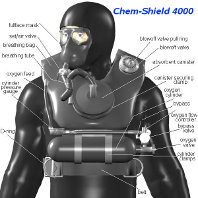
 The Chem-Shield 4000 (TM) -- Perfect for grocery gettin' and chemotherapy techs!
Selecting healthy foods from grocery stores is very difficult in this era, since so many of the products are actually toxic. Reading the ingredients can be scary, and most people do not understand them. This is intentional. There is one ingredient that recurs often: modified food starch. The only thing this label tells with certainty is that the so-called "food starch" is not really food starch anymore. There is no definitive way to know what the derived substance is, but it is unnatural.
It is most often corn starch that has been chemically treated to change it into a thickening agent, emulsifier, or a stabilizer. It can be chemically treated in many ways, and for different reasons. Many of the foods are now being altered by being fermented with genetically-engineered bacteria. Consumers have no way to know. The F.D.A. believes that people have no right to know; as is the case for radioactive foods, genetically-engineered foods, and so on.
An ingredient simply labeled "modified starch" has been treated with an acid in order to lower its viscosity. The chemical industry apparently believes that acid, especially sulfuric acid, is an essential nutrient. Perhaps that is why U.S.P iron supplements are made with it, and it is certainly why iron supplements are so dangerous.
The long-term health effects of these things are completely unknown. These modified starches are difficult for a body to digest, and of course, there have been no publicly-released studies about the long-term effects of eating these mystery substances. Modified corn starch often contains about 10% maltodextrin, which is a common term used by industry to hide the presence of monosodium glutamate.
A huge portion of modified starches come from China. The lead poisoning of toys and the melamine poisoning of infant formulas should have resulted in huge concerns over Chinese food supplies, but the F.D.A. treated the poisoned babies as just another public relation's problem, and even coached the companies involved about how to best deal with the media backlash. Modified food starch is in the great majority of processed foods, and if they were to become likewise tainted by the Chinese, then millions of American citizens would die before the source was discovered.
Modified food starch seems to be an all-encompassing term which allows food manufacturers free reign over what they do to their products. There are several different base foods that can be used to produce food starch, including corn (usually labeled as "modified corn starch"), potatoes, tapioca, and wheat.
Related Articles
Fake Chemical Vitamins: How To Know If Your Vitamins Are Real And Effective